THE ULTIMATE GUIDE TO FRYING PANS
HOW LONG DOES A FRYING PAN LAST?
Choosing the right frying pan determines not only how well your dishes turn out—but also how long you’ll enjoy using your pan. Kuhn Rikon has been developing high-quality pans in Switzerland since 1926 and knows from experience:
„There is no such thing as a universal frying pan.” Every pan has its strengths—and its ideal use.
To help you make the perfect choice, we’ll guide you through the most important types of pans, their features, and their typical lifespan.
PFANNENBESCHICHTUNGEN – UND WIE LANGE SIE HALTEN
PFANNENBESCHICHTUNGEN – UND WIE LANGE SIE HALTEN
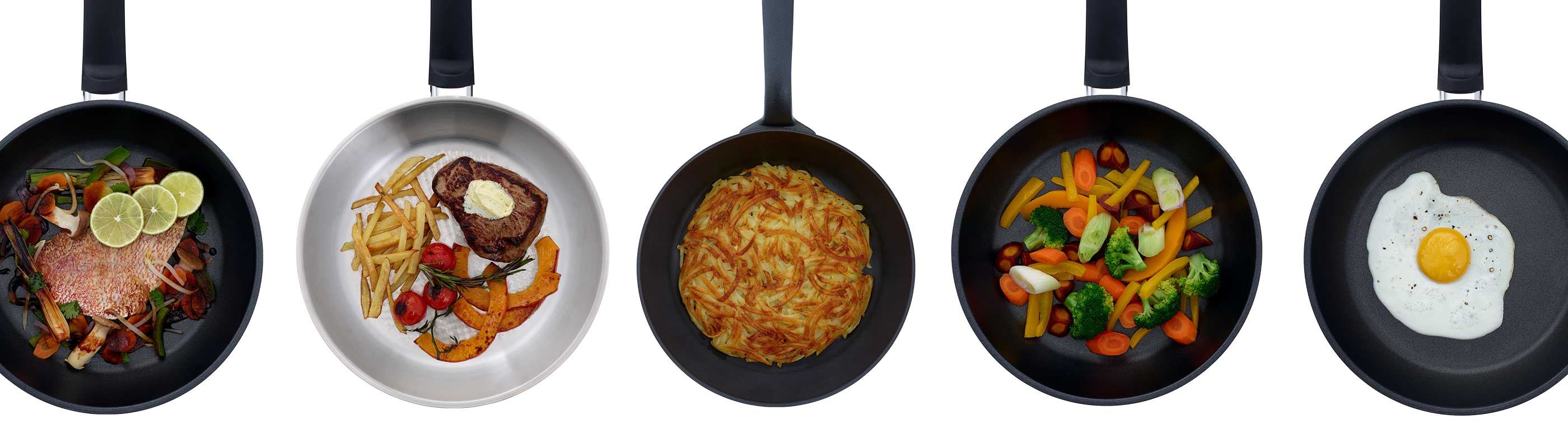
PTFE-COATED SKILLETS
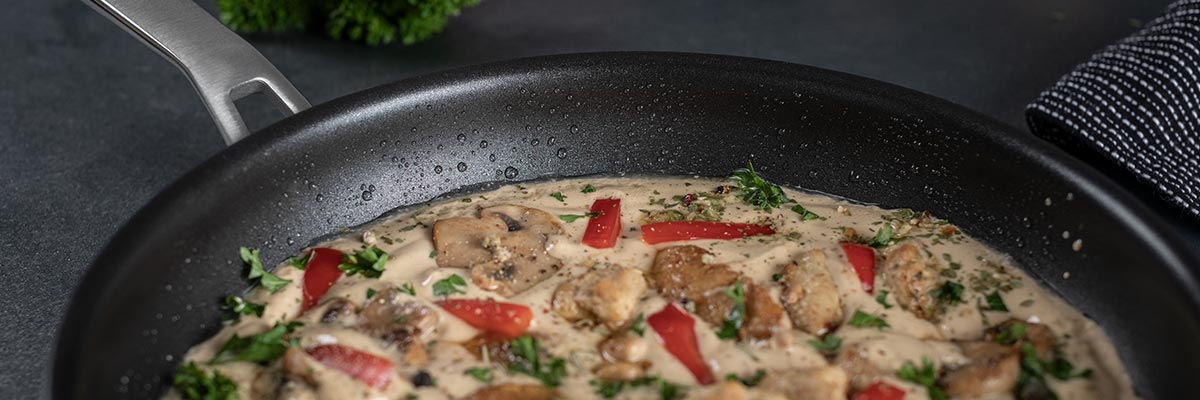
For gentle frying – versatile and easy to clean
PTFE coatings prevent food from sticking and allow for low-fat cooking. The nonstick coating is susceptible to scratches from metal or sharp-edged cooking utensils and should not be exposed to excessive heat.
Construction: Kuhn Rikon uses exclusively 3- and 4-layer coatings consisting of:
• Nonstick layer
• Scratch-resistant middle layer
• Durable bonding layer
This significantly extends the lifespan of such a coating.
Our most sustainable frying pan is PTFE-coated
PTFE belongs to the PFAS family
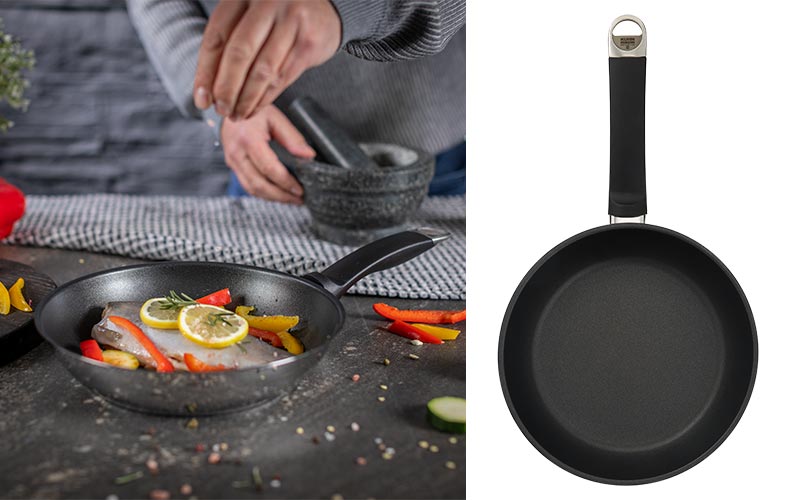
Important:
•never heat when empty
• do not heat above 240°C
•do not use metal cooking utensils
• Washing in the dishwasher shortens the product’s lifespan
Typical lifespan: 3–8 years
CERAMIC-COATED SKILLETS
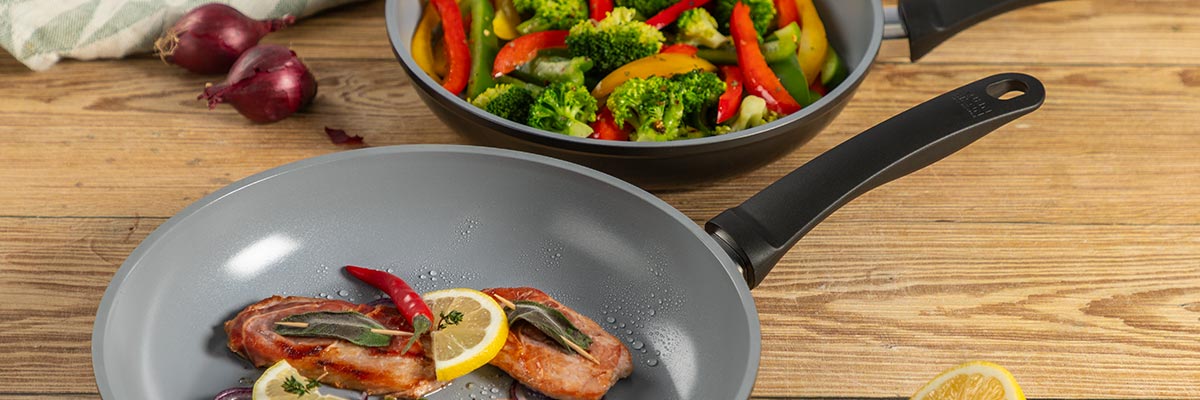
PFAS-free – but more heat-sensitive
Ceramic coatings have a smooth, glass-like surface with microscopic pores. If they are overheated, these pores “burn” – causing the nonstick effect to diminish. The coating is less susceptible to scratches than PTFE but has a significantly shorter lifespan than PTFE. Washing in the dishwasher can shorten its lifespan.
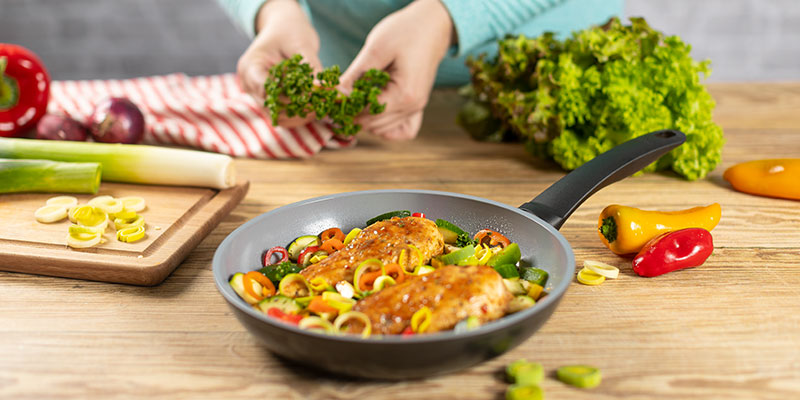
Important:
• Does not have true non-stick properties
• Do not overheat
• Do not heat when empty
• Do not wash in the dishwasher
• May discolor over time
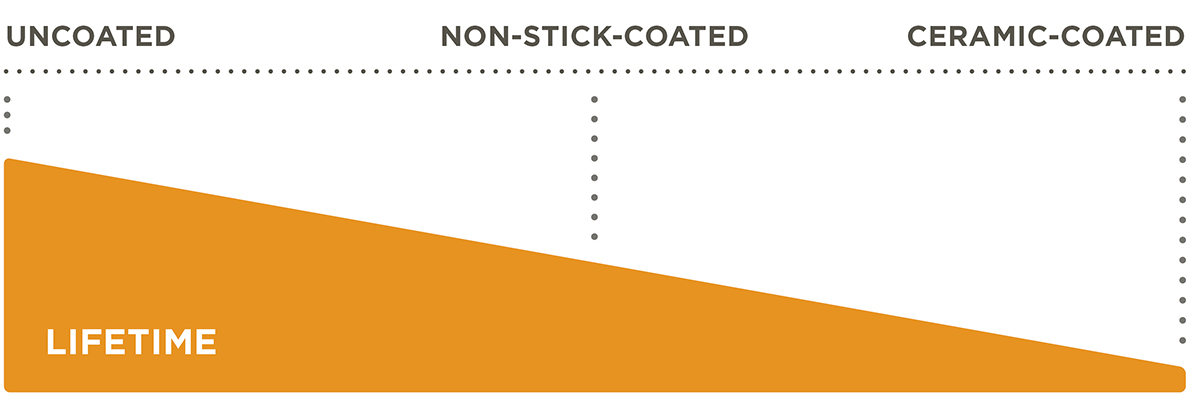
Typical lifespan: 2–5 years
UNCOATED SKILLET
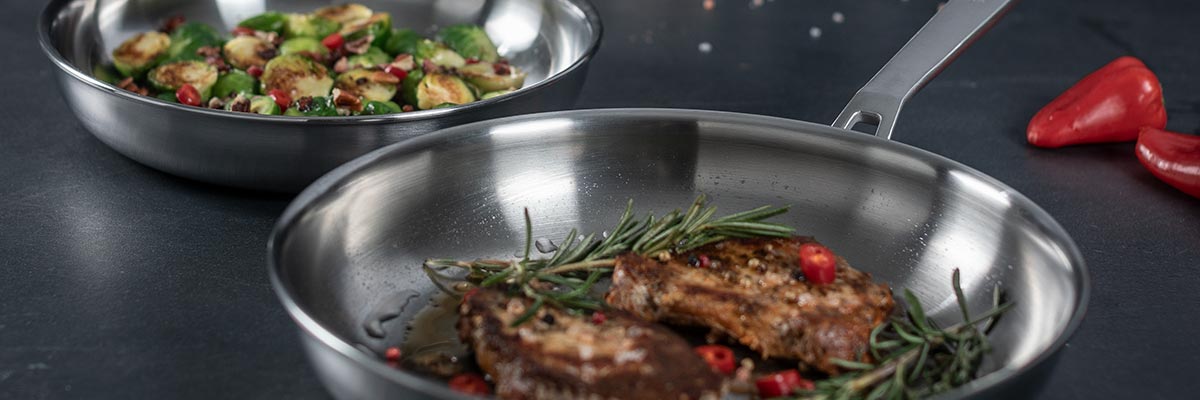
For searing at high temperatures and a perfect roasted flavor
Uncoated frying pans can be heated to high temperatures, making them particularly well-suited for searing meat. They are sturdy and durable, but require some care.
Cook like a pro with uncoated frying pans.
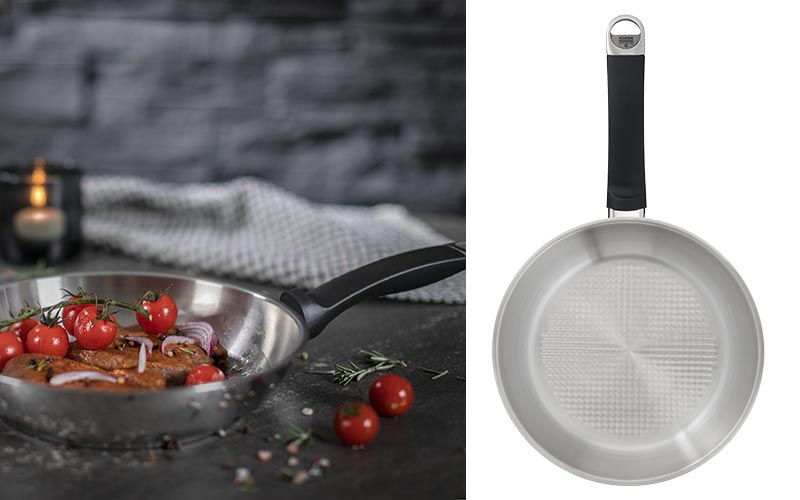
Important:
• Withstands high heat
• Dishwasher-safe
• Very versatile
Typical lifespan: 8+ years, often decades
IRON AND CAST IRON SKILLETS
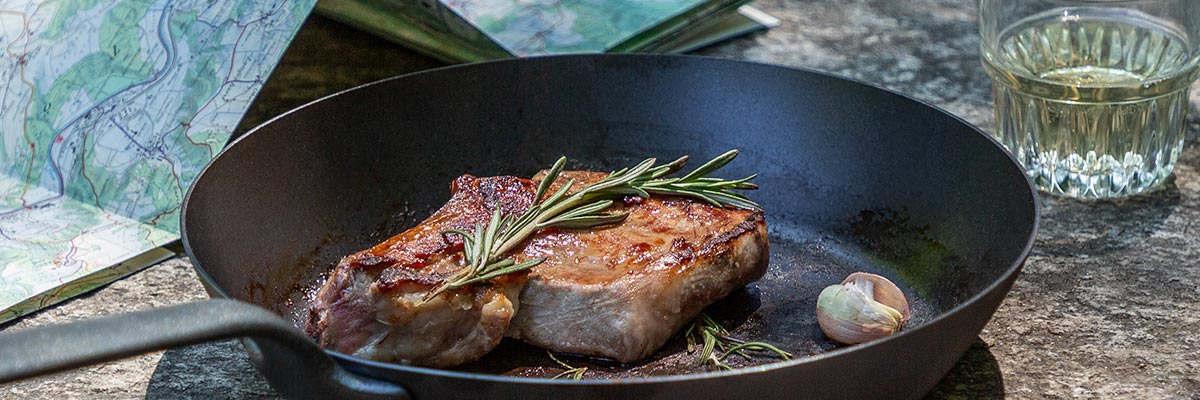
For Life – Patina Instead of Coating
Cast-iron skillets are among the uncoated options. They are virtually indestructible.
With proper care, a patina develops that acts like a nonstick coating.
Everything you need to know about the king of skillets can be found here.
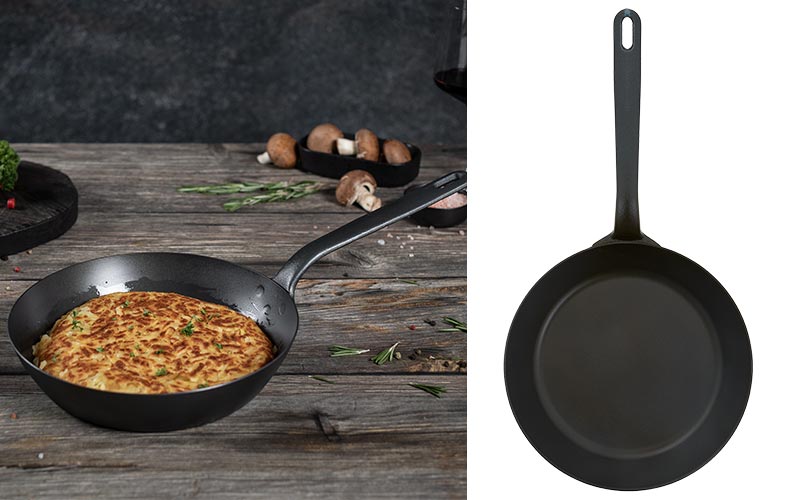
Important:
• Season before first use
• Never clean with dish soap (to protect the patina)
• Ideal for rösti, steak, and grilling
Typical lifespan: Lifetime
WHEN SHOULD A SKILLET BE REPLACED?
LEBENSDAUER IM ÜBERBLICK
UNCOATED STAINLESS STEEL SKILLET
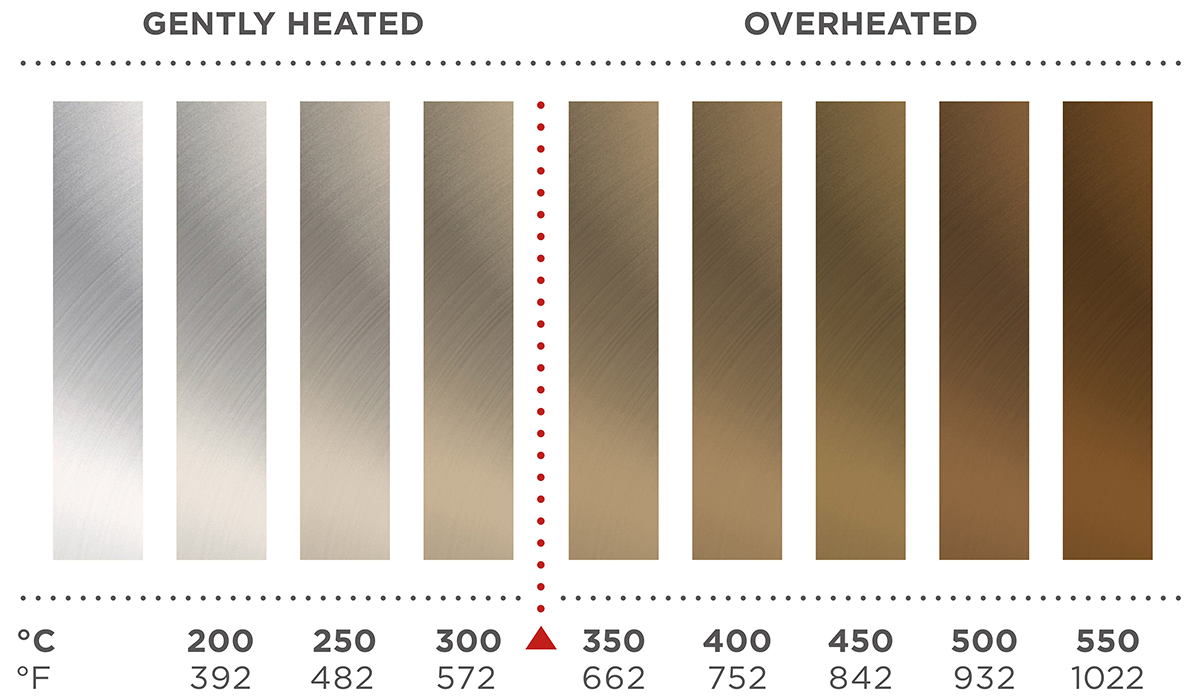
The end of a stainless steel skillet’s lifespan is marked by a distinct brownish discoloration (see the red line in the diagram below). This discoloration is a sign that the skillet has been exposed to high temperatures on multiple occasions. Among other things, this can also cause the skillet’s body to warp.
PTFE-COATED SKILLETS
If the coating is heavily scratched or even begins to peel off, a PTFE-coated skillet has reached the end of its useful life. With proper care, this can happen well over 8 years after purchase.
CERAMIC-COATED SKILLETS
If a ceramic-coated skillet has stubborn, baked-on residue that can no longer be removed with regular dish soap and a dishcloth, it needs to be replaced.
CLEANING – HOW TO EXTEND THE LIFESPAN
PTFE- AND CERAMIC-COATED SKILLETS:
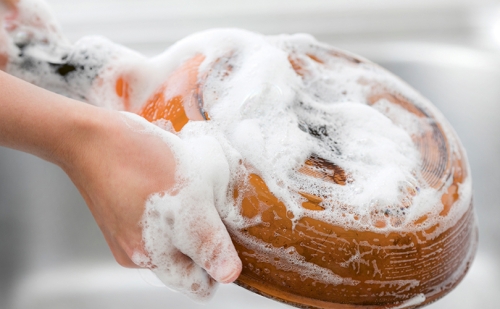
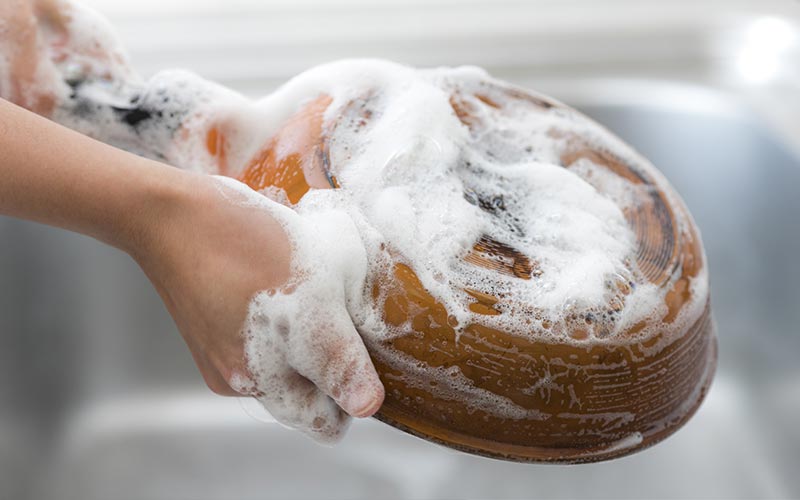
• Use only soft sponges
• Use a small amount of dish soap
• Never put in the dishwasher
STAINLESS STEEL:
• Baking soda method (see the link below for details)
• Dishwasher safe
IRON:
• Do not use dish soap
• Just rinse and wipe dry
• Protect the patina
• Oil thoroughly before storing
There is no need to use abrasive, mechanical cleaning tools—in fact, you should avoid them altogether.